
 Education
Every great idea begins with a spark. For S&S Worldwide, that spark came when Co-CEO Hy Schwartz learned about The Zones of Regulation® – a framework and digital curriculum created by occupational therapist and author Leah Kuypers, designed to teach students self-regulation, emotional control, and problem-solving skills. Widely used in schools around the globe, The Zones gives educators and students a common language for recognizing feelings and building strategies that support success.
From Hy’s very first conversation with Leah, it was clear we shared a mission: helping every student develop the skills they need to navigate life’s challenges and succeed both in and out of the classroom.

The Inspiration
At S&S, we’ve always believed in supporting the whole child. That means preparing students not only with academic knowledge, but also with the ability to navigate their world, build strong relationships, and maintain physical and mental well-being. The Zones of Regulation framework resonated immediately because it embraces this same philosophy – recognizing that regulation is a skill that is central to well-being. It’s about giving students practical tools to fully engage in learning, connect meaningfully with others, and thrive as whole people.
Hy recalls sitting in that first conversation with Leah, imagining what it would look like if every classroom had a place where kids could pause, reflect, and choose strategies to regulate themselves. That “what if” became the starting point of a journey.
… What if every classroom had a space or resource where students can independently choose the tools that help them feel calm, focused, and ready to learn …
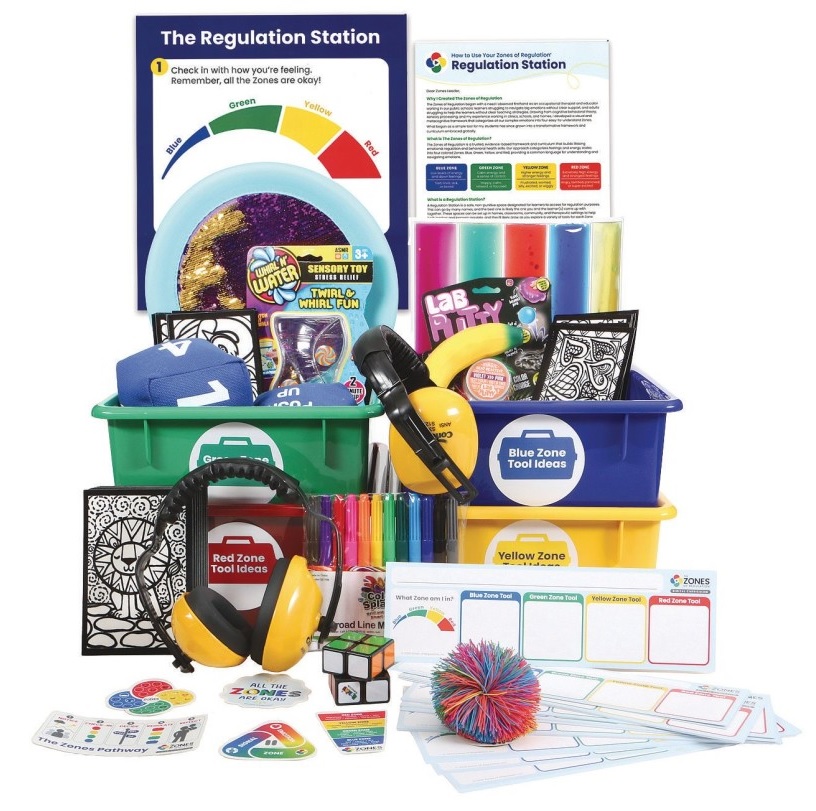
That’s the vision that shaped what would become the Regulation Station Kit.
From Concept to Creation
Turning the idea into reality was a deeply collaborative process. The Zones of Regulation team was hands-on from the very beginning, carefully selecting each item in the kit to ensure it aligned with The Zones of Regulation framework. Every tool, visual, and activity was chosen and/or designed with intention.
We asked ourselves:
- What would make it easiest for educators to bring The Zones into daily routines?
- What tools would spark curiosity and give students ownership of their own regulation?
- How could we design it so the strategies felt accessible, durable, and inclusive for all learners?
The answers shaped every decision. With feedback and support from both teams, the Regulation Station Kit took form – an organized, ready-to-use collection that bridges the gap between theory and practice.
Why It Matters for Students
The Regulation Station isn’t just a box of supplies, it’s a tool for empowerment. When students have the chance to practice recognizing their feelings and selecting a strategy that support s their regulation, they build lifelong skills in self-awareness, resilience, and problem-solving.
Think about a student who comes back from recess upset after a conflict with a peer. Instead of carrying those feelings into the rest of the day, they can go to the Regulation Station, choose a calming tool, and use it to get to a place where they can rejoin learning. Small moments like this, repeated day after day, have a powerful ripple effect.
A Partnership with Purpose
Behind the kit is a partnership rooted in a shared belief: when educators are equipped with the right resources, students thrive. The Zones of Regulation’s expertise and intentionality, combined with S&S’s long, rich history of designing accessible classroom solutions, made it possible to transform an idea into a ready-to-implement tool.
But the Regulation Station Kit is about more than the organizations behind it. It’s about the kids who will use it, the teachers who will guide them, and the school communities that will grow stronger because of it.
Looking Ahead
From idea to impact, the Regulation Station Kit shows what’s possible when vision meets collaboration. We hope that it helps educators feel supported and students to feel seen – and that it creates classrooms where every child knows: it’s okay to feel a wide variety of feelings, and there are tools to help me manage those feelings.
Because when students learn how to regulate, they don’t just find success in school, they build skills for life.



Leave a Reply