
 Education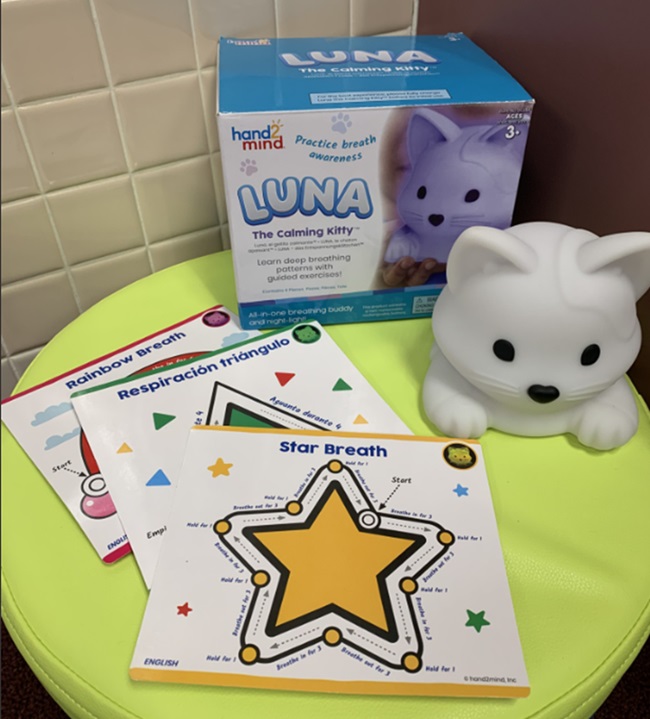
As an occupational therapist working in a school setting, I understand the importance for students to have safe, supportive ways to regulate their bodies and emotions throughout the school day. For some students, that might mean taking a quiet moment after becoming dysregulated in the classroom due to frustration or other behavioral challenges. For others, it might mean using sensory tools or a calming routine before they are able to return to learning.
In my district, every classroom has a calming corner to support a variety of learners self-regulation needs in the classroom setting.

A calming corner is always utilized a supportive and safe space that helps students reset. When it is set up thoughtfully and introduced clearly, it can become a really helpful part of the classroom routine.
In my work, I encourage teachers to think of a calming corner as a space for calming and self-regulation, not just something to use when a student is already overwhelmed. When students learn that they can use certain tools and strategies to help themselves feel more organized, they build skills that can carry over far beyond that one moment.
What to Include in a Calming Corner
I usually suggest keeping calming corners simple and intentional. Too many items, bright colors, or distracting materials can sometimes make it harder for students to settle.
Some of the items I like to see included are:
Comfortable Seating
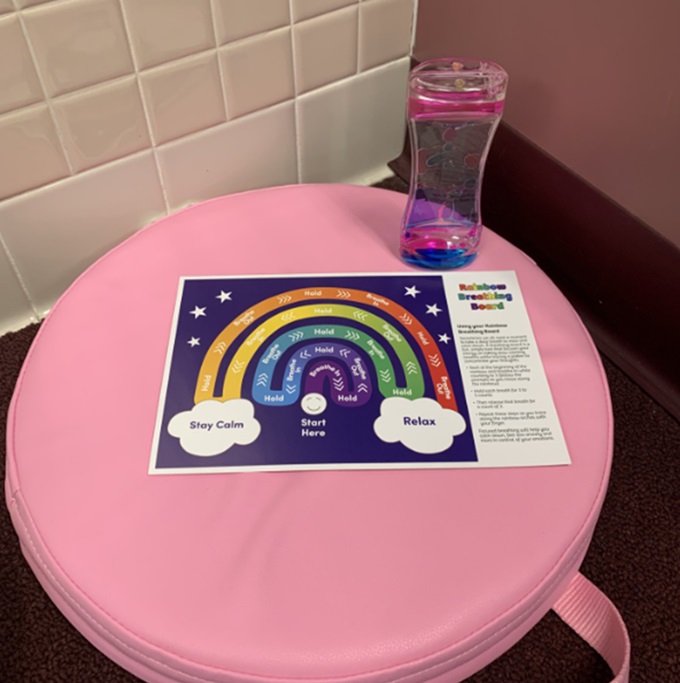
A bean bag, floor cushion, or flexible seat can help create a space that feels different from the rest of the classroom.
- Go2 Round Bean Bag Chair
- Round Floor Cushions with Handle Set
- American Plastic Toys Scoop Rocker Kids Flexible Floor Seat
Visual Supports
Feelings visuals, nature images, or calming posters in neutral colors can help students identify emotions and choose a strategy.
Sensory Tools
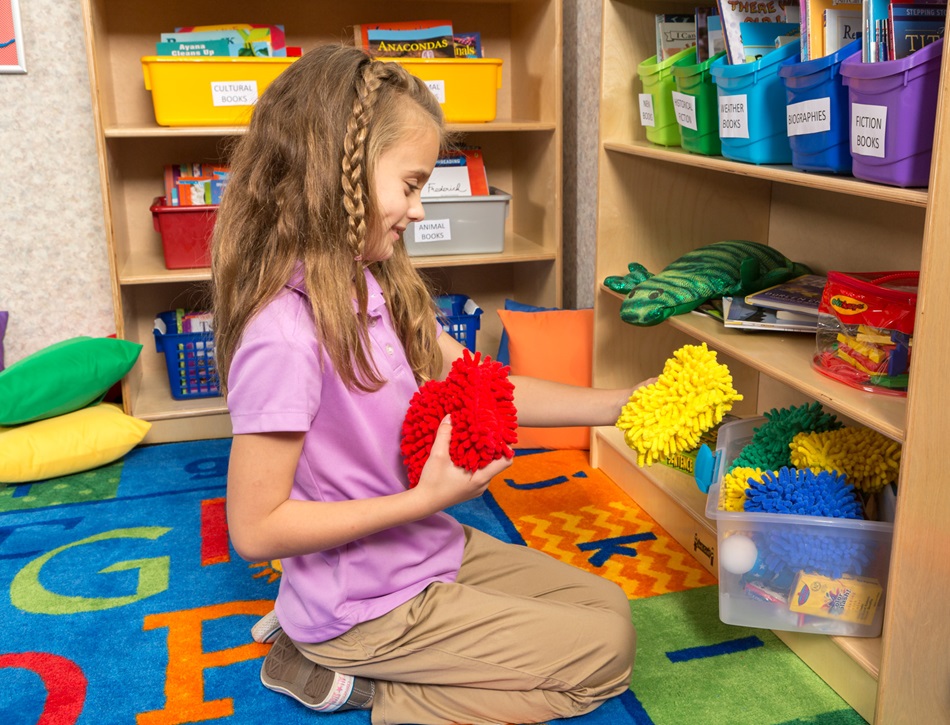
Students often benefit from having access to tools they can squeeze, hold, or manipulate while calming their bodies, like stress balls and fidget tools.
Breathing Aids & Emotion Supports
Visual or hands-on tools can be useful for helping students slow down, refocus, and manage emotions.
Choosing the Right Location
When I talk with teachers about setting up a calming corner, I usually recommend choosing a low-traffic area of the classroom where a student can have a little separation without feeling disconnected from the room. It does not need to be a large space. Even a small corner with a few intentional supports can be effective.
I also think it is important that the space feels calm, not crowded. In many cases, less really is more.
Teaching Students How to Use the Space
A calming corner works best when expectations are clear. I always encourage adults to teach students what the calming corner is for, when they can use it, and what returning to class should look like. Model how to use the space and practice it together as a class. This helps the space feel empowering rather than isolating.
Teach students:
- When it’s appropriate to use the calming corner
- How long they should stay – visual timers help to keep track of time
- How to return to learning when they feel ready
A Small Space with a Big Impact
Something to keep in mind is that a calming corner will not look exactly the same in every classroom, because students’ needs are not all the same. Teachers in my district are given similar suggestions and have the flexibility to create a space that fits the theme and/or needs of the students in their classrooms! Some students respond well to quiet and visual supports while others need tactile input, movement, or a more structured calming routine.
That flexibility is one reason I value calming corners so much. They can be adapted to the age group, classroom setup, and individual student needs.
From an OT perspective, I see calming corners as one small environmental support that can make a big difference. They can help reduce disruptions, support independence, and give students a safe way to practice self-regulation skills during the school day.
When a classroom makes space for regulation, it sends an important message to students: support is available, and it is okay to need tools that help you feel ready to learn.
You can also check out some great Calming Kit options here >
About the Author:
Jennifer Dupre, MS, OTR/L
My name is Jennifer Dupre and I have had the pleasure of being an Occupational Therapist in a public school for the past 15 years. I have experience working with students ages 3-21 years of age in the school setting working on various skill sets that are individualized to each student. As an occupational therapist, I work in many classrooms and wear many hats to support students within the academic setting.
S&S Worldwide has been a place where I can go to order all of my therapy needs from fine motor activities to sensory tools. S&S Worldwide has many options for my students that help them achieve success in the academic setting.
Leave a Reply