Schools are investing more than ever to help students catch up on unfinished learning, from foundational reading skills to grade-level math concepts that were disrupted over the past few years.
Districts have expanded tutoring programs, added dedicated intervention blocks to the school day, and adopted new curriculum resources designed to accelerate learning. And yet, despite this increased time, funding, and effort, academic outcomes aren’t improving as quickly as many had hoped. So what’s missing?
The challenge many schools are facing:
Across the country, school leaders are doing everything right on paper and yet, they still feel stuck. Despite genuine urgency and real investment, academic outcomes aren’t accelerating the way anyone hoped.
If more instruction alone solved the problem, wouldn’t we already see it in the data?
That question is worth sitting with. Because the answer points to something most academic recovery plans overlook entirely.
The real barrier isn’t academic, it’s readiness.
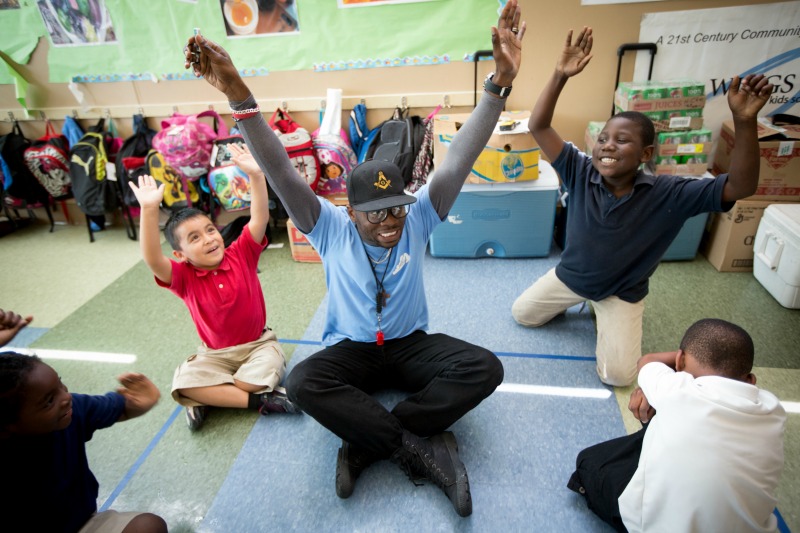
What teachers are seeing in classrooms today isn’t just unfinished learning. It’s students who can’t stay focused, who shut down when things get hard, who struggle to regulate their emotions and behavior. Even the strongest lesson plan falls flat when students are overwhelmed or disengaged.
This is where the conversation needs to shift. It’s not a question of academics versus social-emotional learning (SEL). It’s about academics through SEL. When students can focus, manage frustration, and persist through challenges, learning accelerates.
What students bring in:
- Difficulty concentrating
- Low frustration tolerance
- Disengagement or shutdown
What teachers face:
- More time managing behavior
- Lost instructional minutes
- Stalled lesson momentum
Individually, these interruptions may feel minor, but over time they accumulate into a significant loss of instructional time. As minutes turn into hours, the impact on learning becomes increasingly difficult to ignore. This is what makes behavior more than a classroom management issue. It is often a primary barrier to academic progress.
What the research now makes clear:
Educators have felt this connection for years and now, we have the data to back it up. A large-scale meta-analysis from Yale researchers, spanning over 33,000 students across 12 countries, found that students in SEL programs showed measurable, consistent academic gains.
+4.2 percentile points in overall academic performance
+6.3 percentile points in reading & language arts
+3.8 percentile points in math
In schools that implemented SEL consistently over a full year, gains were even more significant and, in some cases, equivalent to a full letter grade improvement. This isn’t just theoretical but a measurable academic impact.
What high-performing schools are doing differently:
It’s important to note that the schools that are seeing stronger recovery aren’t just increasing instructional time. They’re changing how students experience learning. The difference shows up in three key practices:
- SEL is woven into daily routines and not bolted on as an afterthought
- Students are taught to recognize and manage their emotions
- Students reset and re-engage faster after setbacks
The result? Classrooms where students stay engaged longer, transitions run smoother, and teachers spend less time redirecting and more time teaching. When students are ready to learn, instruction becomes exponentially more effective.
Ready to move beyond stalled recovery?
If SEL is this closely tied to academic outcomes, the real question is: what does the research say about implementation that actually works and how can schools apply it sustainably?
Download our white paper that summarizes the research conducted by Yale University, which summarizes:
- What the Yale research shows (and what it means for your school)
- Why SEL accelerates academic outcomes
- Which implementation approaches deliver lasting results