Summer learning has become a top priority for districts, and for good reasons. With persistent achievement gaps and unfinished learning still impacting post-pandemic classrooms, summer programs are frequently positioned as a key intervention strategy.
However, the data reveals a more complex reality, particularly for literacy development. While math outcomes may show modest gains through summer instruction, reading outcomes often plateau. With inconsistent access to summer programming, sustaining literacy growth becomes even more challenging.
The implications are clear: we cannot rely on school-based programs alone to maintain reading progress. Literacy development must extend beyond the classroom and into the home.
Despite substantial investments, with billions of dollars allocated to summer and afterschool programming by the end of 2024 and high-poverty districts leading these efforts, participation remains inconsistent.
Even thoughtfully designed summer programs encounter significant barriers that limit their reach:
-
Cost – Program fees, particularly for those run by private providers or community partners, place participation beyond many families’ financial means.
-
Scheduling conflicts – Parent work schedules, multiple children with different needs, and competing summer commitments make regular attendance challenging.
-
Transportation – Access to reliable transportation continues to be a critical barrier, especially in rural and under-resourced communities.
-
Childcare coordination – Families often face difficulty arranging care for younger siblings while older children participate in programming.
-
Eligibility requirements – Program criteria, including those connected to meal service eligibility, can inadvertently exclude students in high-need areas.
-
Cultural and linguistic accessibility – Families who are less familiar with school systems or who face language barriers may choose not to participate.
The outcome is predictable: students from higher-income households are significantly more likely to access structured summer learning opportunities, while students who stand to benefit most remain underserved. This disparity in access perpetuates existing achievement gaps, particularly in literacy development.
Summer learning, in its current form, does not reach every child who needs it. Addressing this reality requires a more comprehensive strategy.
What the Data Is Telling Us About Reading
Research from organizations like NWEA (Northwest Evaluation Association) consistently demonstrates that summer learning loss is real, but it doesn’t affect all areas equally. The data reveals a clear pattern:
-
Math shows more promise than reading – Students are more likely to make gains in math during summer programming than in reading.
-
Reading outcomes often stagnate – Even when students attend summer school regularly, reading performance frequently remains flat.
-
Prior progress is vulnerable – Students can lose a significant portion of the reading growth they achieved during the school year, with those who made the strongest gains often experiencing the steepest decline.
Why does this happen?
Math skills tend to be more discrete and responsive to targeted, short-term instruction. Reading development, by contrast, relies on sustained momentum. Fluency, stamina, vocabulary, and comprehension grow through consistent, regular engagement.
When reading habits are interrupted, they become difficult to reestablish. The summer reading slide isn’t simply a temporary setback; it accumulates year after year.
Why Literacy Needs to Travel Home
Reading isn’t an isolated event but a habit that requires ongoing practice.
Brief, daily interactions with text have a greater impact on literacy development than sporadic blocks of instruction. When school routines pause for the summer, students still need consistent access to books and meaningful opportunities to engage with language.
At-home literacy exposure plays a critical role in helping students:
- Maintain decoding and fluency skills
- Sustain comprehension strategies
- Reinforce positive reading identities
- Prevent regression
When reading remains a presence in the home environment, students don’t need to recover lost ground in the fall. They return to school ready to build on what they already know.

The Case for Literacy Take-Home Learning Bags
Literacy-focused take-home learning bags offer a practical solution for extending summer learning beyond the classroom.
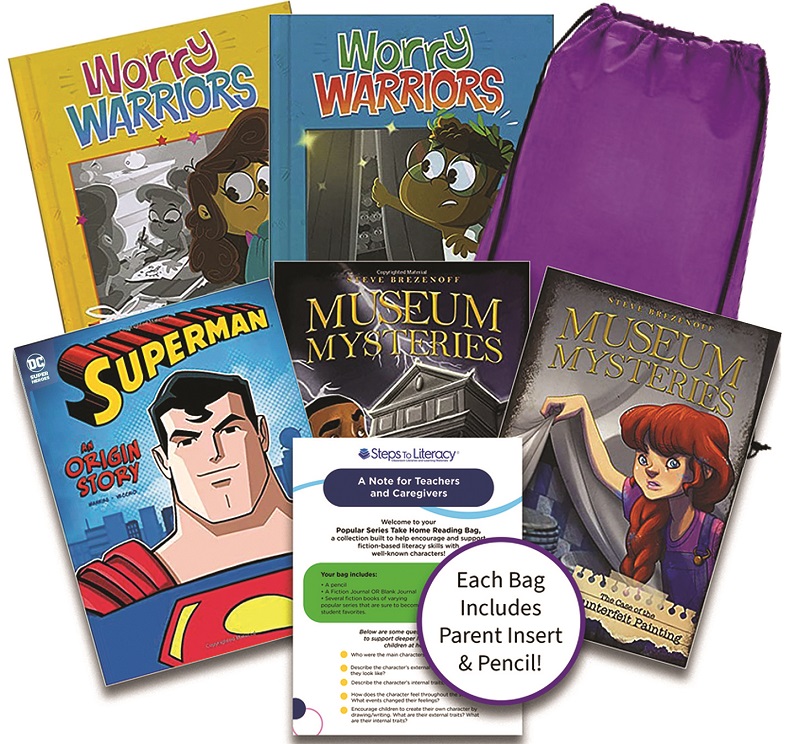
Programs are increasingly using structured take-home reading kits to ensure students have direct access to books and literacy materials even when they cannot attend in-person programming. Solutions like our Literacy Take-Home Reading Bags are designed to make this process easy and scalable for schools and districts.
Each bag includes several developmentally appropriate fiction and nonfiction books, along with simple support tools such as a pencil and a family-friendly parent insert that encourages consistent reading habits at home. The materials are curated to promote independent practice, engagement, and rereading throughout the summer.
Districts can select grade-level bundles from Kindergarten through Grade 6, making it easier to align materials to student reading levels and instructional goals. Many schools use themed sets, such as summer readiness collections, popular character series, and high-interest nonfiction packs – to motivate students and provide variety in the types of texts students encounter.
Access also means language inclusion. Expanded Spanish Take-Home Reading Bag options allow districts to better support bilingual learners and Spanish-speaking households with engaging, language-appropriate books that promote literacy development across the summer months.
Examples of Literacy Take-Home Reading Solutions
Schools and districts use a variety of themed and grade-specific take-home reading bags depending on their summer literacy goals. Popular options include:
-
Summer Readiness Take-Home Reading Bags by Grade Level
Curated fiction and nonfiction titles designed to help students maintain reading skills and routines over the summer months. -
Popular Character Series Take-Home Reading Bags by Grade Level
Familiar characters that motivate independent reading and increase student engagement. -
High-Interest Nonfiction Take-Home Reading Bags by Grade Level
Engaging nonfiction topics that support comprehension, vocabulary development, and content-area curiosity.
All options are available in grade-level bundles from Kindergarten through Grade 6, with English and Spanish versions to support diverse classrooms and bilingual learners.
The strength of this approach lies in its accessibility.
Take-home literacy bags are:
- Equitable – Every student receives consistent support, regardless of their ability to attend summer programming.
- Low-barrier – No technology, logins, or specialized training required.
- Instructionally aligned – Reinforces stamina, fluency, and comprehension behaviors.
- Scalable – Easily distributed across classrooms, grade levels, or entire districts.
Why This Works for Districts
Take-home literacy support doesn’t replace summer school—it strengthens and extends it.
This strategy amplifies existing investments by reinforcing the impact of programs already in place. It supports families authentically by providing ready-to-use materials without creating additional demands. It also expands reach by ensuring students who cannot attend in-person programs still have access to meaningful reading opportunities.
Most importantly, it acknowledges a fundamental truth: learning doesn’t only happen where students can physically attend.
A Smarter Way to Protect Reading Gains
Summer learning strategies are most effective when literacy practice continues beyond the school-year calendar.
When reading materials and meaningful opportunities travel home, every child maintains a connection to literacy—regardless of how unpredictable summer schedules become.
Districts committed to strengthening summer reading outcomes are reimagining what learning looks like outside traditional classroom settings and how to support it consistently, accessibly, and equitably.

Support Summer Reading Beyond the Classroom
When students have consistent access to books at home, they’re better positioned to maintain reading momentum and return to school ready to grow.
Our exclusive Literacy Take-Home Reading Bags make it easy for schools and districts to extend literacy support into the summer months. Each bag includes engaging fiction and nonfiction books, simple tools, and a family-friendly parent insert to encourage daily reading at home. Grade-level bundles are available from Kindergarten through Grade 6, with English and Spanish options to support diverse learners.
👉 Explore Take-Home Reading Bags for Summer Literacy Support