Classrooms today are alive with color, sound, and activity, creating an exciting yet sometimes overstimulating environment. Busy schedules, shifting routines, and the natural energy of a full group of students can create moments when emotions run high. In those moments, both learning and relationships can suffer if students don’t have a way to reset.
A Calming Corner offers a simple, research-informed solution: a small, low-stimulation area within the classroom where students can pause, self-regulate, and return to learning with a clearer mind. Far from being just a special education support, these spaces benefit all learners, helping every child develop the self-awareness and coping skills needed for academic and social success.
The Link Between Regulation and Learning
Research shows that stress and emotional dysregulation interfere with core cognitive processes such as attention, information processing, and social interaction, which leads to measurable declines in learning outcomes. Chronic stress has been linked to lower academic performance, increased behavioral incidents, and reduced engagement. A Calming Corner helps students return to learning with improved focus and emotional balance by offering a designated place to reset.
Calming Corners embody the principles of Universal Design for Learning, benefiting neurodiverse students and peers alike. Whether a child has ADHD, sensory sensitivities, or simply a tough morning, these spaces give all learners equitable access to the support they need to stay engaged. They’re not a special privilege but they’re a core part of an inclusive classroom environment.
Challenging behaviors are often signs of unmet sensory or emotional needs, not deliberate defiance. A Calming Corner helps shift the focus from punishment to support by giving students what they need to regain control. Instead of escalating situations with office referrals or punitive time-outs, teachers can redirect students to a positive space where they can self-regulate and rejoin the group calmly.
Results You Can See in the Classroom
A growing body of research underscores the impact of classroom sensory spaces. Schools that implement calming areas report:
- Reduced disruptive behavior and fewer office referrals.
- Improved self-regulation, as students practice recognizing and managing their emotions.
- Greater on-task engagement, with students able to return to lessons more quickly.
- Enhanced social-emotional learning (SEL), as students gain skills in self-awareness and coping strategies.
Districts piloting these spaces often see measurable returns, from higher student engagement scores to improved classroom climate ratings.
Building a Calming Corner That Works
Not all Calming Corners are created equal. The effectiveness of a sensory space depends on thoughtful design, the right tools, and clear guidance for students.
- Location & Design
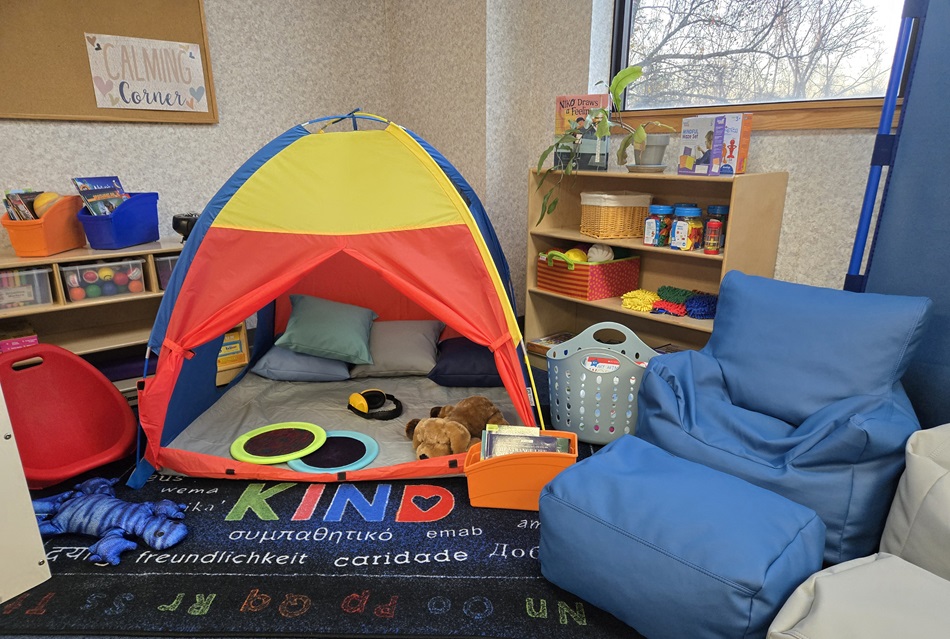
The ideal space is accessible but not distracting. A corner of the room with soft lighting, muted colors, and minimal foot traffic creates a soothing atmosphere without pulling attention away from instruction.
- Selecting Tools & Supports
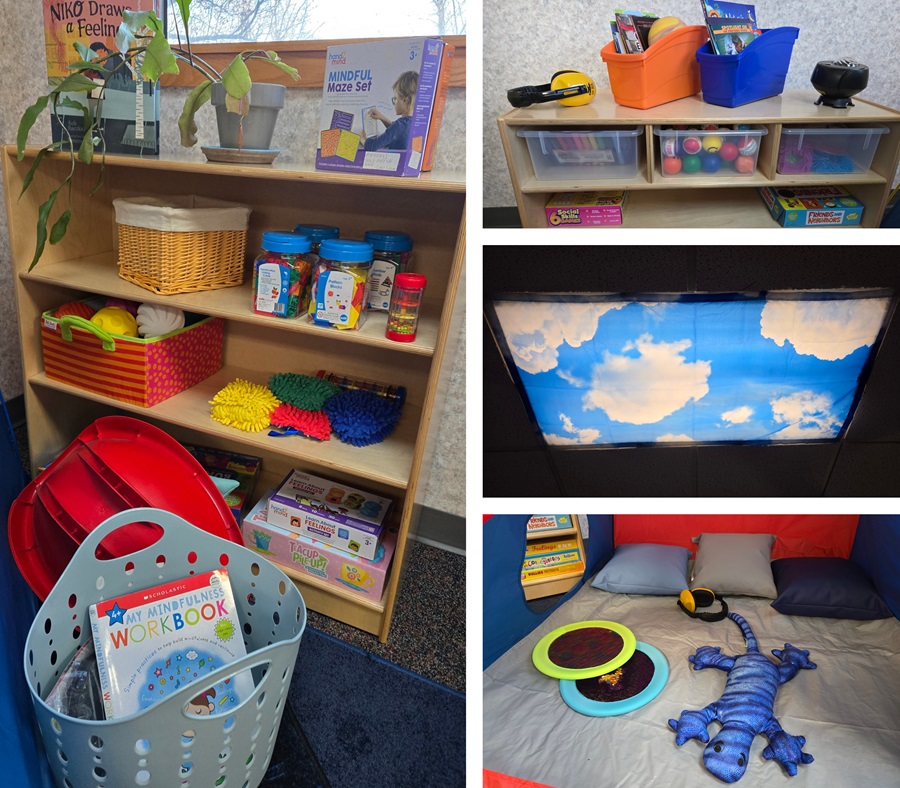
A well-stocked Calming Corner offers quiet, tactile tools such as stress balls, fidget items, and sensory bins with safe materials. Cushioned seating, beanbags, or soft rugs add comfort, while noise-reducing headphones help students filter out classroom sounds.
- Visual Supports & Clear Guidelines
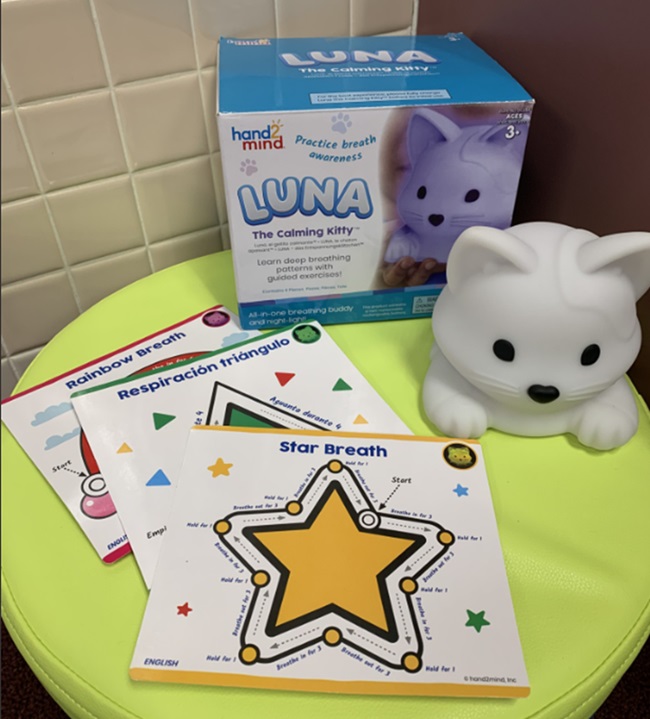
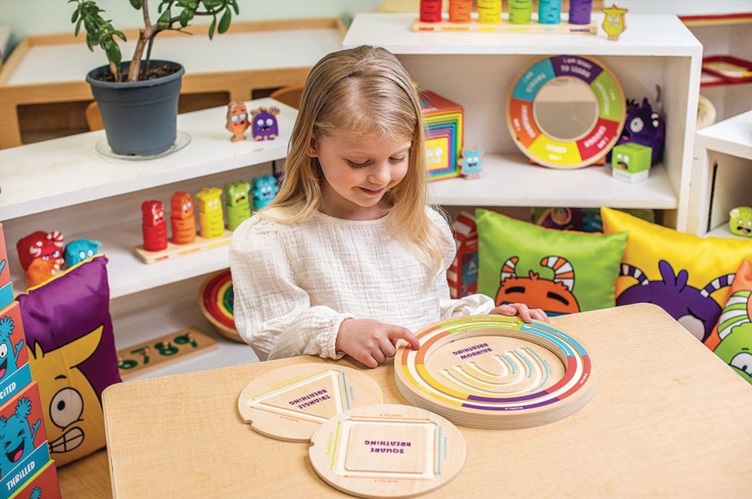
A simple poster or cue card can guide students through the process like how to enter, how long to stay, and how to rejoin the group. Optional “check-in/check-out” charts or feeling thermometers help students name their emotions and track progress over time.
Bringing It All Together
Calming Corners are more than a classroom trend; they’re a research-informed practice that supports both academic achievement and emotional well-being. By integrating sensory support into every classroom, schools model healthy coping strategies, normalize self-regulation, and create environments where all learners can succeed.
At S&S Worldwide, we offer a variety of calming items, sensory support products, and SEL kits to help educators create effective, inclusive spaces with ease. If you’re designing your first Calming Corner or enhancing an existing setup, our tools can help you bring the vision to life.