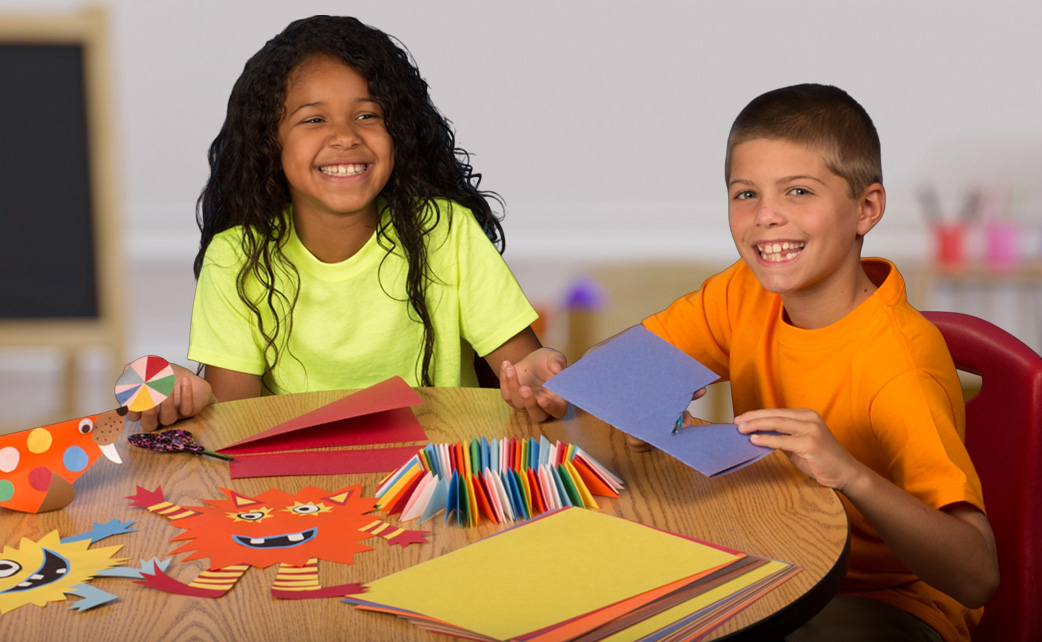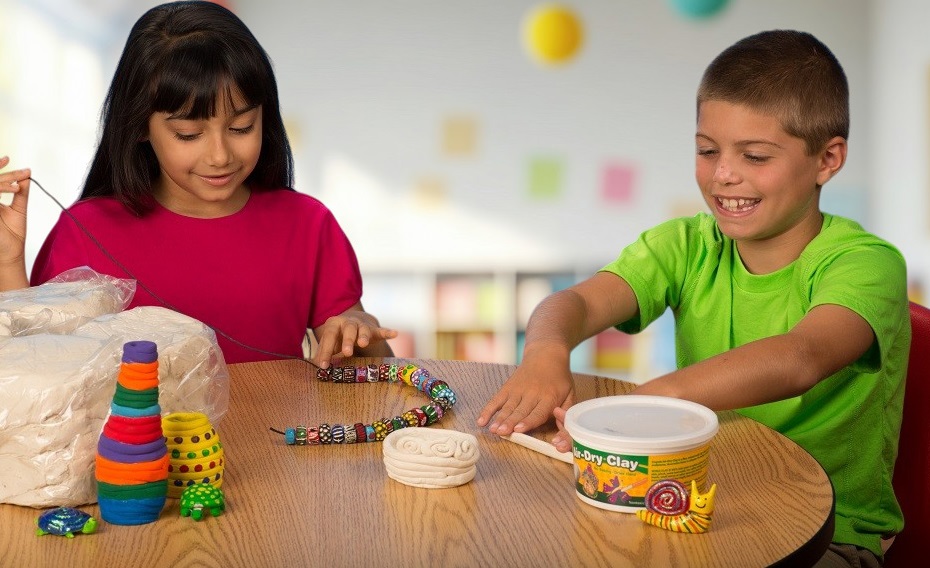
Creative time isn’t just for fun; it’s also an opportunity to develop essential skills that support learning in the classroom and beyond. Arts and crafts give students the chance to experiment, explore ideas, and follow their curiosity. But they also develop skills closely linked to academic success: fine motor control, critical thinking, and improved focus.
Whether a child is cutting, gluing, painting, or folding, each action plays a role in their development. Crafting helps train the small muscles in their hands, encourages decision-making, and teaches them how to stick with a task from start to finish. It’s a hands-on way for kids to strengthen their minds while expressing their creativity. Tools like scissors and glue sticks make these activities even easier and more enjoyable.
Here’s a closer look at what children gain when they dive into art-making:
Fine Motor Skills
Arts and crafts are a workout for the hands. Activities like coloring, cutting with scissors, using glue, or molding clay all require small, deliberate movements. These motions strengthen hand muscles, improve coordination, and support tasks like writing, buttoning shirts, or using utensils. Developing fine motor skills lays the foundation for independence and success in many daily and academic activities. The right tools, such as coloring projects or some modeling clay, can help with these skills, giving children the perfect materials to practice and refine their movements.
Problem Solving and Critical Thinking
Every craft project involves a series of choices. What materials will I use? How do I build what I imagine? What do I do when something doesn’t go as planned? These moments push children to think critically, explore solutions, and adjust their approach. The creative process is full of trial and error, encouraging kids to be resourceful and flexible as they bring their ideas to life. Encourage these problem-solving skills with open-ended craft kits, like craft easy packs from S&S, that provide a variety of materials for endless possibilities.
Focus and Patience
Crafting naturally builds concentration. Many projects require multiple steps and attention to detail, from measuring and tracing to waiting for paint to dry. Kids learn to slow down, stick with a task, and see it through, which builds patience and persistence. They also learn how to deal with frustration, especially when a project doesn’t turn out exactly as imagined. Materials like painting supplies can give kids the opportunity to focus on each step, whether it’s creating a detailed painting or stamping their favorite designs.
Supporting Young Creators at Home or in the Classroom
Art time is most meaningful when it’s student-led and process-focused. Here are a few simple ways to encourage creative learning:
- Ask, don’t guess. Instead of asking “What is it?” try “Can you tell me about your drawing?” This invites kids to share their thinking and values their perspective.
- Let them lead. Avoid steering them toward a specific outcome. Provide materials and space, and let their ideas guide the project. Having a variety of craft supplies like beads or foam shapes, can help give them the freedom to explore their creativity.
- Celebrate the process. Praise effort and curiosity, not just the finished piece. This helps build confidence and encourages authentic self-expression.
Arts and crafts are more than a creative outlet. They offer rich opportunities for kids to develop the physical, cognitive, and emotional tools they need to thrive. With each brushstroke or paper fold, children aren’t just making art, they’re building the skills that drive success in school and in life.
Ready to get started? All it takes is a table, some craft supplies, and a little imagination.