
 Arts & Crafts
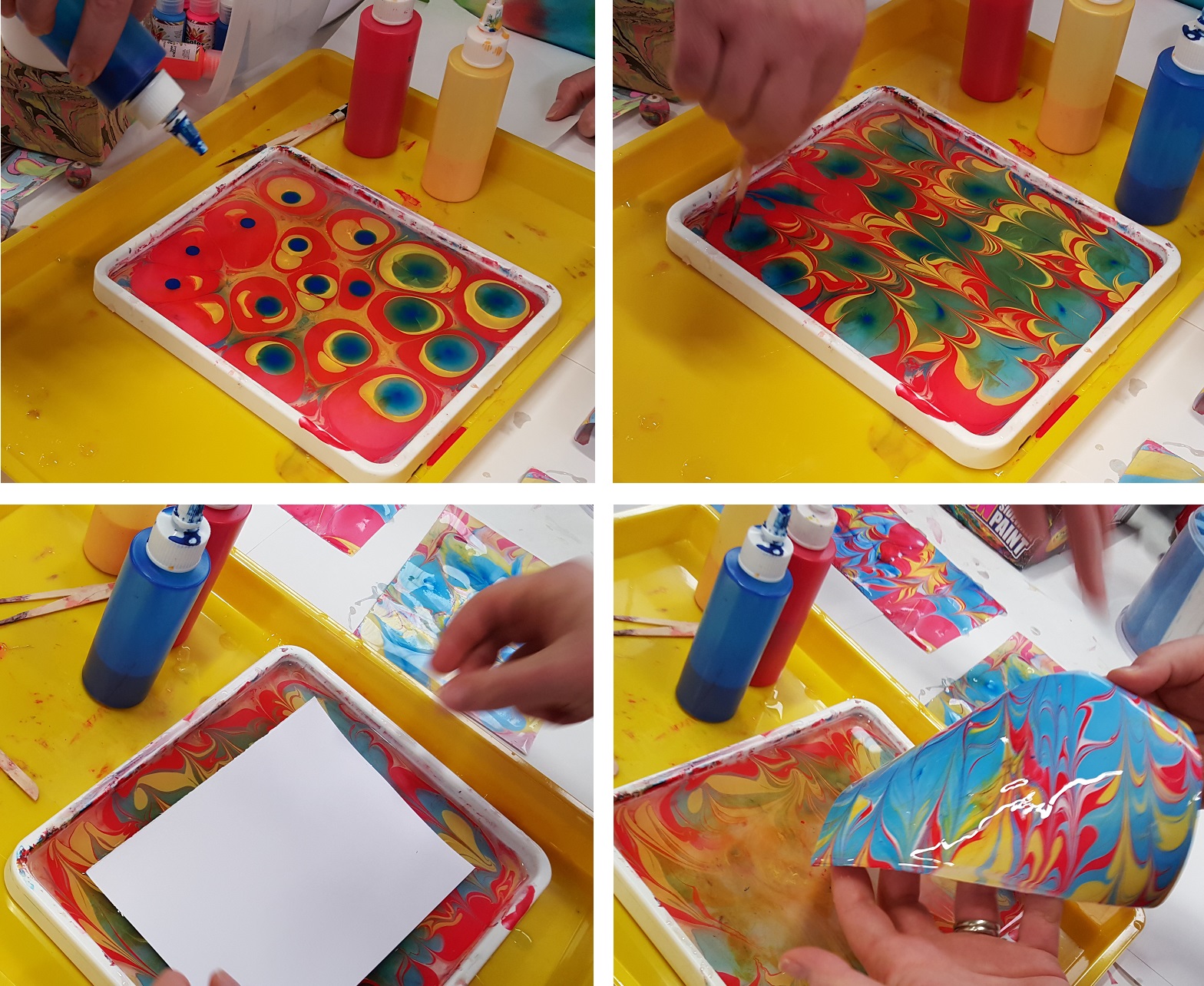
One of my favorite craft products that we have started selling this year is our Marbling Kit. I was first introduced to it at our internal New Products Trade Show, and I liked it so much that I purchased our marble concentrate to try myself at home.
My discovery? MARBLING IS THE COOLEST!
This craft was so much fun! It takes some prep work, but the great news is you can mix the concentrate ahead of time (you need hot water and a whisk) and store it, or put aside until you are ready to use. Although pictures and the short video from our trade show below will give you the main concept of marbling, as a first time user I wanted to share some tips and tricks with you that you can refer to before you get started.
Whether you are a crafter that loves to try new things, an activity director, or art teacher that wants to introduce marbling into their program – the immediate results of marbling always have a great reaction, so I highly suggest it. It also make a great gift idea!
Here are your basics to get started:
Items you can marble:
Heather from Maneville Arts in New Jersey shares her experience with marbling: “We used your marbling kit for a community event and it was a huge success. We prepped the marbling mixture at my home and transported it to the park where the event was being held. It was such a popular table we had to shut down before the event was over because we ran out of marbling liquid! Very happy with this product and would definitely order it again.”
How To Marble
Mixing the concentrate:
- Fill a flat tray with hot water. We used these art trays and they worked really well. I used a baking pan at home. Spread the marbling concentrate evenly in the water while whisking. The best way I can describe this is like making gravy. The marbling concentrate that we sell at S&S also has mixing instructions on the inside of the container.
- The mixture should be good for weeks and lasts for multiple uses so feel free to make it ahead of time, especially if you are limited on access to hot water.
Mixing the paint:
- Add water to your acrylic paint bottles so that the paint floats. The mixture of water (can be cold) and paint should be approximately 3 parts water to 1 part paint. Each color of acrylic paint will need to be tested to be sure it floats.
- A great tip is to make a small amount of the mixture at a time so you can test the paint in a small dish of the concentrate. If paint sinks to bottom, there is too much paint (or not enough concentrate). The paint should float on the top as seen in these pictures.
Cleaning the slate between each marble:
- Have scrap paper available or paper towels to run along the top of the concentrate in between each marble. You should get 20-30 projects with each batch, depending on what you are using for a canvas. When paint begins to sink, you need to add more concentrate.
What Types of Items Can I Marble
Paper or fabric are common items, and you may want to start there. Once you have the hang of it, you can move on to some fabrics, wood, ceramic, plastic, vinyl, etc. At the end of this post, I’ve included some of the different materials and tips for marbling with them.
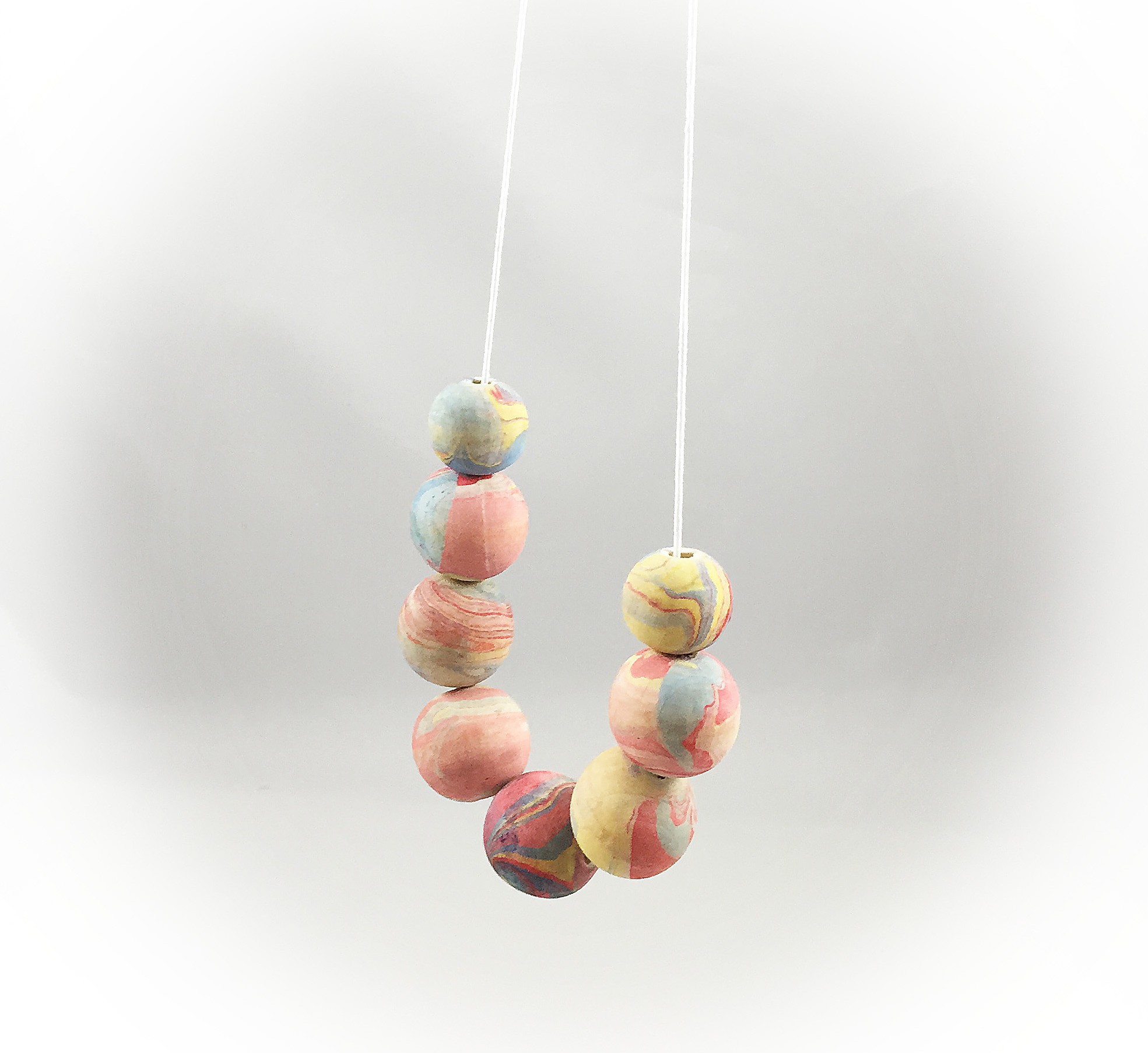
I made this necklace from some of our wooden beads
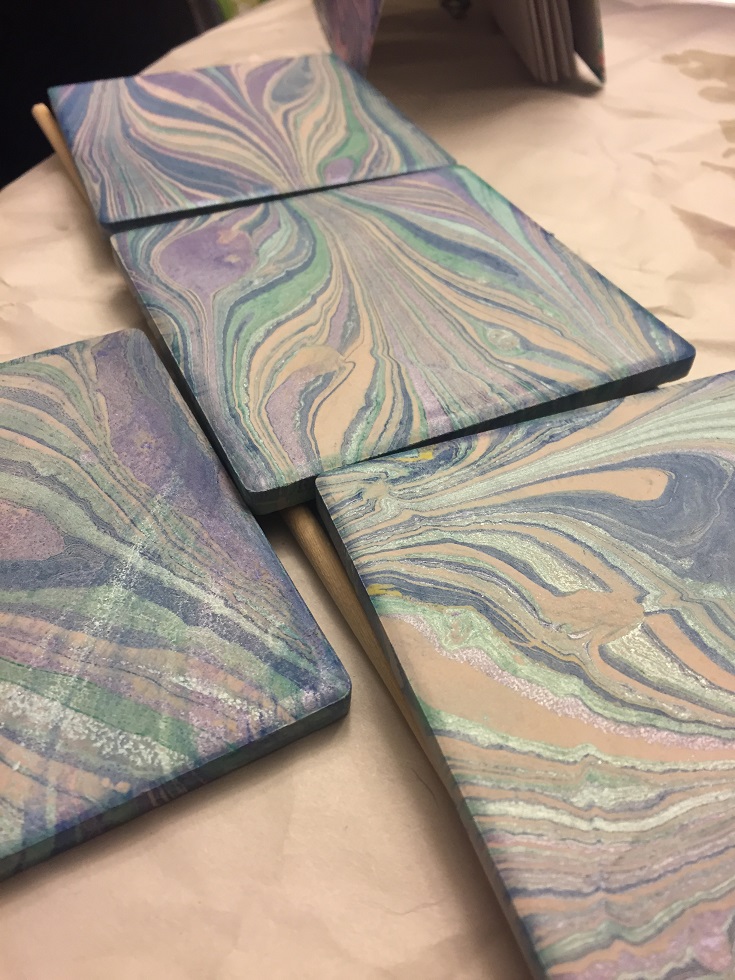
These are ceramic tiles with our metallic acrylic paint
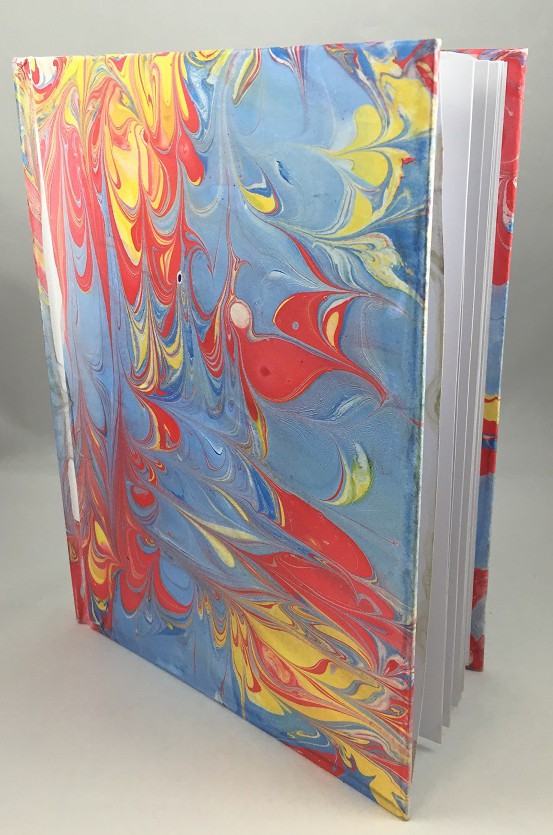
Hardcover Blank Book – my favorite!
Tips for Marbling Different Materials (here’s a list)
Paper- The smoother and thicker the paper the better (copy or construction paper will tear too easily). Same rules apply for cardstock, chipboard, oak tag and poster board. For marbling large sheets you will need a large shallow tray or cookie sheet.
Fabric- This requires some additional preparation but works well on natural fibers. Wash and dry new fabric to remove any sizing (do not use fabric softener). Iron out any wrinkles (do not use spray starch). You will also need to add textile medium to the acrylic paint solution. Marble fabric when dry.
Wood – For even coverage and true color it’s best to base coat un-finished wood surfaces with white acrylic paint and allow plenty of time to dry before marbling.
Medium-density Fiberboard (MDF) – Natural surface color does change the tone of some of the lighter shades of paint, but results are very detailed due to the super smooth surface. Base coat with white acrylic paint to keep colors bold.
Bisque – For even coverage and bright colors, it’s best to base coat un-finished bisque surfaces with white acrylic paint and allow plenty of time to dry before marbling.
Paper Mache – Natural surface color does change the tone of some of the lighter shades of paint but results are great and very detailed. Base coat with white acrylic paint to keep colors bold.
Plastic- First scuff up the slick surface with fine grit sandpaper and remove any dust/oils allowing the paint to adhere.
Vinyl – Works great, very detailed results! Try our Color-Me™ Wacky Flyers.
Tell us your favorite item to marble!
-
I am doing Christmas ornaments and was wondering how much marbling concentrate I need to put in 2 gallons of water and do I mix it with room temperature water or hot water.
-
Does the paper need to be coated in alum solution?
-
What’s the ratio for water and concentrate?
-
I would like to coat the terracotta with a marbling pattern with ceramic paint, apply glaze, and bake it. What material can I add to the ceramic paint to get a clearer color?
-
You don’t mention using Alum or anything to make the paint transfer stick? When doing wood with a white base coat – how do you get the transfer to stick?
-
Hi,
I am wondering what kind of acrylic paint would you recommend to use to marble fabric?
Are your SPLASH acrylic paints permanent after silk is dies and ironed?
Thanks
Ilona-
Hi Ilona, yes Color Splash Acrylic Paint is permanent when mixed with this fabric medium: http://www.ssww.com/item/chromacrylic-textile-medium-PT3293/
-
-
Really a nice art it is glad to read this thanks for sharing it with us loved it a lot.

Leave a Reply