Why Engagement is the Foundation of Everything
If you ask any experienced teacher what separates a classroom that hums with energy from one that feels like an uphill battle, and the answer is almost always the same: engagement.
Student engagement is essential as it drives everything else. When young learners are genuinely engaged, behavior challenges shrink, retention improves, and the classroom becomes a place students want to be. Research shows that engagement is one of the strongest predictors of academic achievement, particularly for elementary and middle school students. It’s also a powerful buffer against absenteeism, anxiety, and disconnection from school.
But here’s the thing: engagement isn’t magic, and it doesn’t require a complete classroom overhaul. You don’t need a new curriculum, a renovated space, or a perfectly choreographed lesson plan. What moves the needle, especially for young learners, is a collection of small, intentional shifts.
Engagement strategies for young learners don’t have to be complicated. Here are five key categories of proven approaches to student engagement, each one targeting a different dimension of what keeps kids curious, motivated, and connected to learning.
- Movement & Brain Breaks
Short, strategic bursts of movement that reset attention and reduce behavior disruptions almost immediately.
- Student Voice & Choice
Small, meaningful decisions that give students ownership over their learning and boost motivation.
- Community & Connection
Quick relationship-building rituals that create the sense of belonging every young learner needs to take risks and engage.
- Recognition & Motivation
Specific, genuine acknowledgment strategies that inspire effort with no prize closet required.
- Novelty & Surprise
Low-prep, curriculum-connected twists that snap even the most checked-out students back to attention.
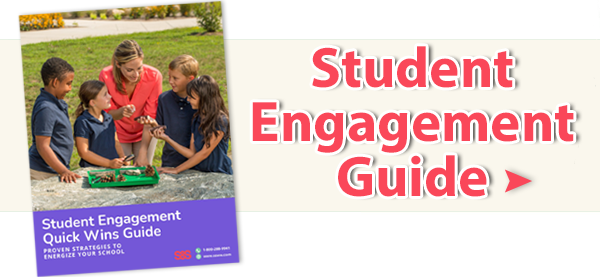
Want the full playbook? Download our free Student Engagement Quick Wins Guide for strategies, implementation tips, and grade-level adaptations.

How to Implement Without Overwhelm
Reading through five categories of engagement strategies can feel exciting, but it can also be a little overwhelming. Here’s how to actually make it happen:
A. The “Just Try One” Approach
The biggest implementation mistake educators make is trying to change too much at once. When you attempt five new strategies simultaneously, it’s hard to know what’s working, easy to get frustrated when something doesn’t land, and exhausting to sustain.
Instead, commit to just one. Pick a single strategy from any category, try it for one week, and pay attention to what you notice. Does student energy shift? Are fewer students off-task during that part of the day? Do kids mention it at dismissal or come in the next morning still talking about it?
One strategy, consistently applied, will teach you more about your students and your classroom than a dozen half-implemented ideas. Sustainable engagement is built on small wins, stacked over time.
B. How to Pick Your First 3 Quick Wins: A Simple Self-Assessment
Not sure where to start? Ask yourself these three questions to identify the areas where a quick win would have the most impact right now:
1) What’s the hardest part of my day?Is itthe post-lunch slump? Transition time? That one block when everyone seems checked out?
That friction point is your first clue. If energy crashes after lunch, start with a Movement & Brain Break strategy. If transitions are rocky, a Community & Connection ritual might be the anchor you need.
2) What are my students telling me verbally or through their behavior?Kids who seem bored or disengaged are often craving more choice, more novelty, or more connection. Kids who act out may be seeking attention that could be redirected through Recognition strategies. Kids who seem anxious or withdrawn often respond most to community-building practices.
3) What can I realistically sustain?The best strategy is the one you’ll actually use.If you know you’re stretched thin on prep time, start with a zero-prep novelty idea or a simple voice-and-choice swap. If you love making things, a recognition display might light you up as much as it does your students.
Based on your answers, choose one strategy from three different categories. This gives you variety without overwhelming any single part of your day.
C. Start Small, Build Consistency
Here’s the truth about classroom culture change: consistency beats intensity every time.
A two-minute brain break done every single day for a month will do more for student engagement than an elaborate activity done once. Small, repeatable practices compound over time and become the invisible architecture of a classroom where students want to learn.
Give yourself permission to start smaller than feels significant. The first week is about testing, not perfecting. The second week is about noticing. The third week is where it starts to feel natural and where your students start to look forward to it.
You don’t need to transform your classroom overnight. You just need to start, stay curious, and trust the process.
Ready to go deeper? Download our free Student Engagement Quick Wins Guide for a full menu of strategies across all five categories, complete with implementation tips, low-prep variations, and suggested grade-level adaptations.