
 Education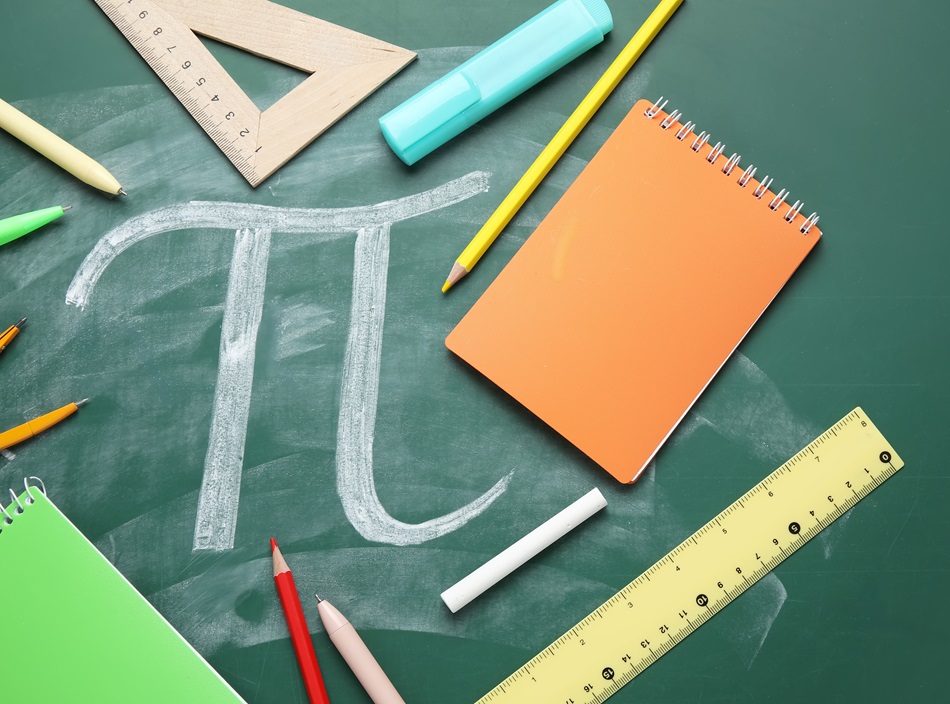
Every year on March 14th, math enthusiasts, educators, and curious minds celebrate Pi Day, a day dedicated to the mathematical constant π (pi). Representing the ratio of a circle’s circumference to its diameter, pi is an irrational number that begins with 3.141592… and continues infinitely without repeating.
Pi Day isn’t just about memorizing numbers – it’s a fun opportunity to explore math, science, and engineering through hands-on activities and creative challenges. Below are a few engaging, classroom-friendly ideas to help students experience Pi in action.
Pi Paper Chain Challenge
(Math + Patterns)

This simple activity adds a mathematical twist to a classic craft. Students create a colorful paper chain that represents the digits of pi while exploring sequences and patterns. To simplify the process, use our Gratitude Garland Activity Pack.
Materials Needed:
Steps
-
Assign a different color to each digit (0–9).
Example: Red = 3, Blue = 1, Green = 4, etc. -
Write the digits of pi on paper strips, using the assigned colors.
-
Link the strips together using glue or tape to form a chain.
Activity Discussion
Challenge students to look for repeating patterns and discuss why pi is considered an irrational number – one that never ends and never repeats.
Pi-Coded Bracelets
(Math + Patterns)
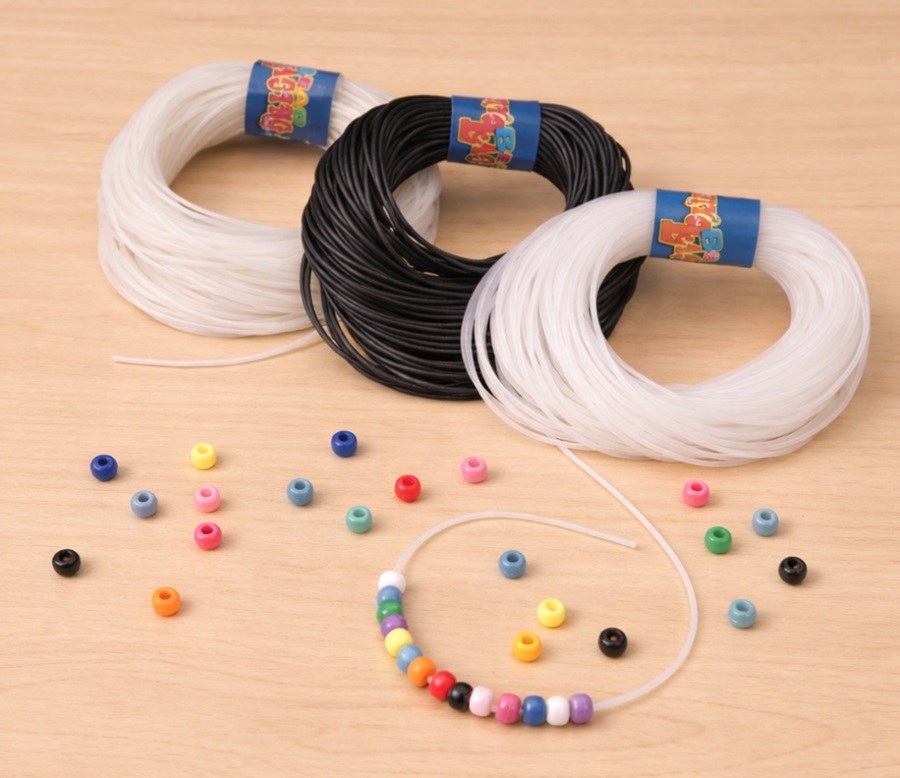
This wearable version of the paper chain helps reinforce number sequences and introduces students to symbolic representation.
Materials Needed:
Steps
-
Assign a bead color to each digit (0–9).
-
Write out the digits of pi and match each digit to its corresponding bead color.
-
String the beads in order to represent pi.
Optional: Use a larger or unique bead to represent the decimal point. -
Tie the ends together with a double knot and trim excess cord.
Activity Discussion
Examine the bracelet and talk about whether any patterns repeat. Reinforce that pi continues forever without repetition.
Kaleidoscope Activity
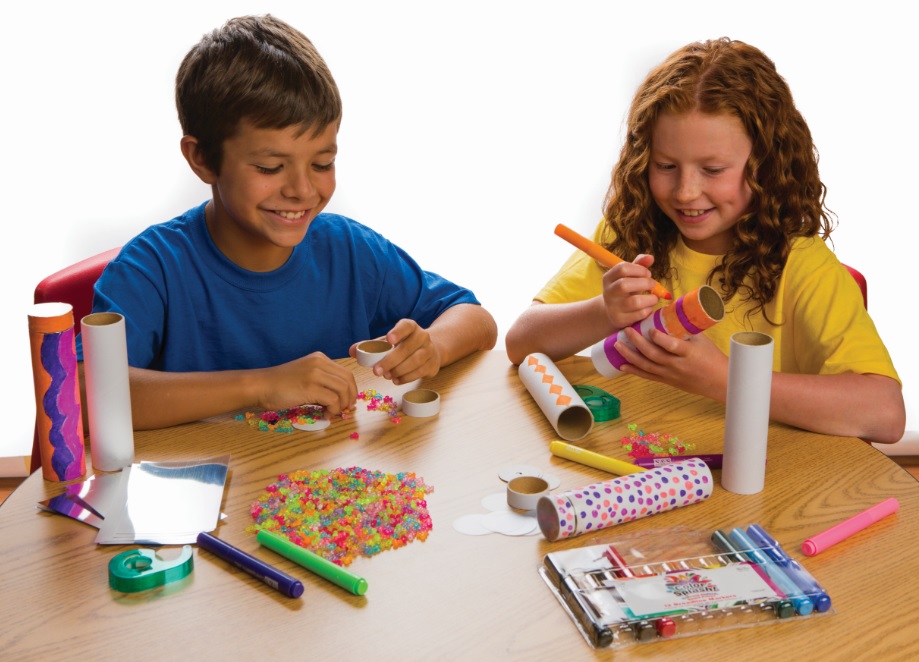
Create a working kaleidoscope while exploring symmetry, reflection, and circular patterns.
Materials Needed:
Steps
-
Assemble the kaleidoscope following the kit instructions.
-
Decorate the outside with pi symbols, circles, or geometric designs using markers, stickers, or paint.
Activity Discussion
Discuss how light reflects inside the kaleidoscope to form repeating, symmetrical patterns. Connect this to circles, angles, and rotational movement—key concepts where pi frequently appears in mathematics.
Robot Pull Toys Craft Kit

Decorate and assemble wooden robot pull toys while introducing basic engineering concepts.
Materials Needed:
Steps
-
Assemble the robot following the kit instructions.
-
Decorate the robot using creative designs or patterns.
-
Test how the robot moves as it’s pulled along the floor.
Activity Discussion
Talk about how wheels move in circles and how pi is used in real-world applications like robotics to calculate rotation, distance, and motion. For example, knowing the circumference of a wheel helps engineers determine how far a robot travels with each turn.


Leave a Reply