 Education
5 Practical Ways Schools Are Bringing Financial Literacy to Life
Financial Literacy
7 min read
Share

Share

The research is clear: young people who learn financial concepts early carry those lessons with them well into adulthood. Stronger habits around saving, budgeting, and planning don’t just benefit the individual student, they ripple outward to shape the financial health of entire families. This makes financial literacy more than a curricular add-on for schools that serve diverse communities.
The good news is that getting started doesn’t require a dedicated program or a restructured schedule. Much like language acquisition or social development, children naturally begin to absorb money concepts through observation, often earlier than we expect.
This means everyday moments are some of the most powerful teaching opportunities available. A trip to the grocery store, picking up school supplies, or even a quick coffee run can spark genuine curiosity when a caregiver or teacher pauses to invite a child into the conversation. Something as simple as asking, “Do you think we should pay with cash or a card today?” can open the door to questions and discussions that lay early groundwork for financial understanding.
For educators and program administrators, understanding how and when to introduce these concepts is the first step toward designing learning experiences that resonate both in the classroom and at home.
The following five strategies offer a practical roadmap, drawn from what schools are already doing successfully, for building financial literacy into your program without starting from scratch:
1) Launch a Financial Literacy Week
Dedicating one week each year to financial literacy is an effective way to spotlight key money concepts without overhauling the existing curriculum. A themed week creates energy around the topic while giving students focused, age-appropriate opportunities to explore financial ideas.
Schools often structure the week around a different theme each day such as Wants vs. Needs, Saving, Budgeting, Earning, and Giving, and build activities around each. Common approaches include:
When students actively participate in earning, spending, and saving within a structured format, the lessons stick. For schools looking for a simple starting point, we created a ready-to-use planning guide that can help educators organize engaging activities without adding extra burden to their schedules.
Download our Financial Literacy Guide here >


Financial literacy aligns naturally with essential math standards, particularly in elementary grades where students are building foundational skills in numbers, operations, and problem-solving. Because money is both familiar and practical, it offers a powerful way to connect classroom math to real-world decisions.
Rather than treating financial literacy as a separate subject, many educators embed money-related examples directly into math lessons. Common approaches include:
Over time, this approach strengthens math comprehension while also building student confidence around money. Concepts that might otherwise feel abstract, such as percentages or multi-step problem solving, become easier to understand when tied to everyday situations.
Explore money and counting items here >

Financial literacy extends beyond counting money. It also involves understanding how economic systems work, how communities exchange goods and services, and how individual choices affect the broader economy. Social studies classrooms provide a natural context for exploring these bigger-picture concepts.
Even younger students can engage with basic economic ideas when they’re presented through age-appropriate discussions and hands-on activities. Schools often integrate financial topics into social studies by:
When financial literacy is framed within social studies, students begin to see money not just as a personal tool, but as part of how communities function and grow. This broader perspective encourages critical thinking about financial choices and their impact on both individuals and society.
Parents and caregivers are often a child’s first and most influential money teachers. The everyday financial decisions families make like budgeting for groceries, saving for a purchase, discussing household expenses, create natural learning moments. Many schools are extending financial literacy efforts beyond the classroom by hosting Family Financial Literacy Nights, which provide a welcoming space for families to learn together and reinforce what students are exploring during the school day.
A successful event might include:
These events help demystify financial topics and empower families to continue the conversation at home. The lessons carry more weight when students see that both their teachers and caregivers value financial learning.
Explore our new Financial Literacy Take Home Reading Bag >

Because financial literacy develops over time, afterschool and enrichment programs offer valuable space to explore these concepts more deeply. These settings tend to be more flexible and hands-on, allowing students to experiment with financial ideas in creative, low-pressure environments.
Many programs incorporate financial literacy through:
When financial literacy is reinforced through enrichment programs, students gain additional opportunities to practice real-world decision-making while building independence and confidence.
Preparing students for the future requires more than academic knowledge. It also means equipping them with practical skills for navigating real-world responsibilities, including how to earn, save, spend, and make thoughtful financial decisions.
The challenge is that financial literacy can’t be taught in a single lesson. Building strong money habits requires consistent exposure, meaningful discussion, and repeated opportunities to apply concepts in context. By weaving financial literacy into existing subjects, engaging families in the process, and creating hands-on experiences through enrichment programs, educators are finding practical, scalable ways to bring money concepts to life.

If you’re looking to introduce or expand financial literacy in your school or program, the right tools can make all the difference. From classroom simulations and budgeting activities to family engagement materials and hands-on resources, having ready-to-use options lets educators focus on helping students build lasting confidence with money.
Browse our Financial Literacy Resources to discover activities, tools, and materials that make teaching money skills engaging and accessible for every learner.

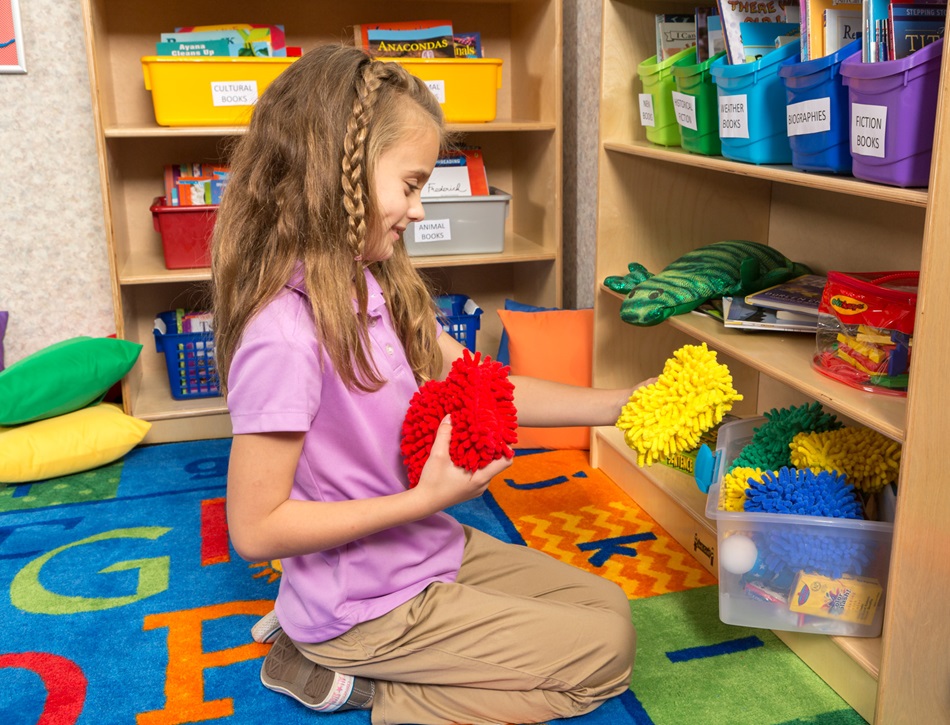
Children take in sensory information all day through sight, sound, touch, movement, taste, and smell. Most of the time, the brain processes this information without much thought. For some children, however, sensory input can be difficult to manage. These differences can affect how a child participates in the classroom. A student who frequently moves, touches […]

For a young child, an ordinary cardboard box can become a fire truck racing off to an emergency, while a simple wooden block turns into a telephone for an important call. In an instant, the scene changes. The child is now the chef of a bustling restaurant, taking dinner orders, preparing imaginary meals, and making […]

What if a craft didn’t stop being fun once the paint dried? Our Flexible Wooden Animal Craft Kits combine creativity with movement, giving kids a project they can decorate, bend, wiggle, slither, and play with long after craft time is over. Made from cleverly notched wood, these animals bend and flex with simple movements of […]
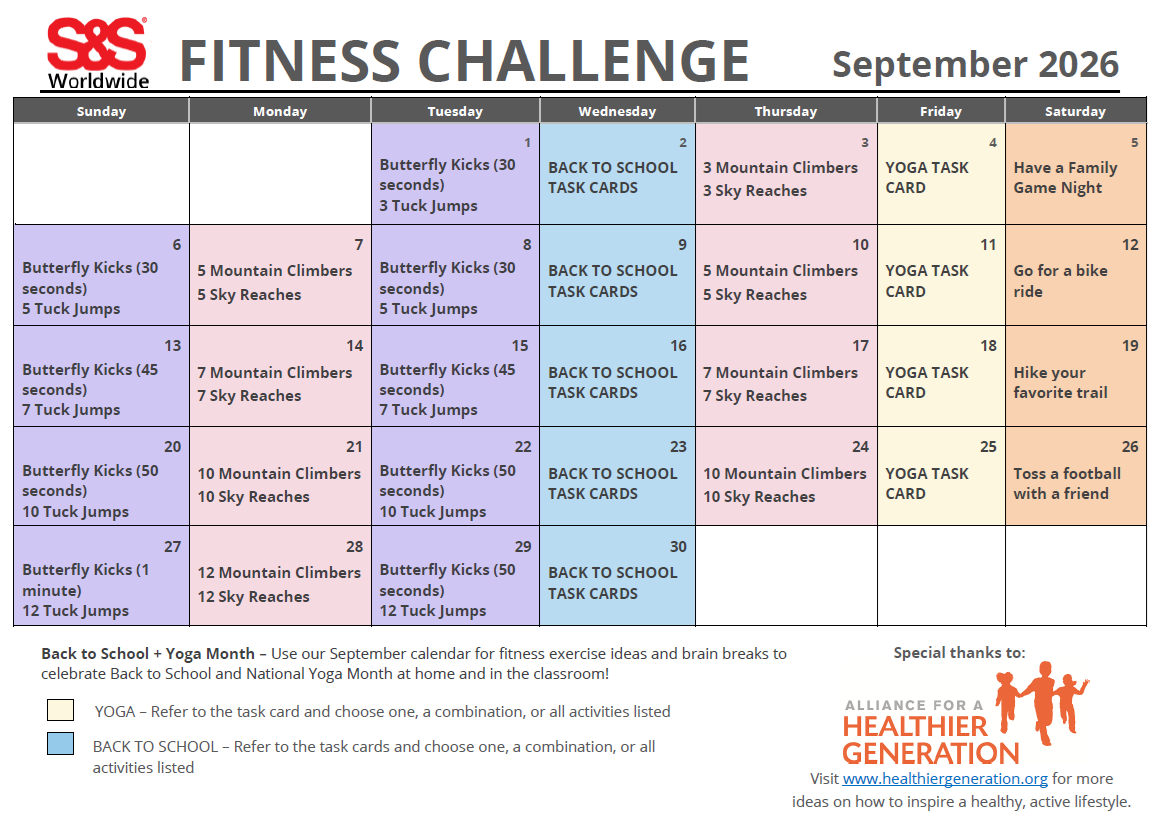
September Fitness Challenge Calendar 2026 Back to School is just around the corner, and our printable calendar is a great resource that teachers can share with students in the classroom. It can also be shared with parents to encourage their kids to stay active at home during the school year. We teamed up with the Alliance […]
Are you an educator, program leader, or creative thinker with ideas to share? We’re always looking for passionate contributors to help inspire our community. Whether it’s a lesson plan, activity idea, success story, or helpful tip — your voice can make a difference.
Interested in contributing? Email us at [email protected] to get started.
Leave a Reply